When a Parent Enters Hospice: What Changes, and How to Be There
Hospice is not giving up — it's a shift toward comfort and presence. Here's what changes when a parent enters hospice, and how families can be there for it.
By Parul Darji, RN, BSN, MSN, MHA

Few phone calls land harder than the one where a doctor says it is time to talk about hospice. If your family is at that place, I want to offer something steadying, from years of walking beside families through it — here in Cortez and across the Four Corners: hospice is not the end of care. In many ways, it is care at its most human.
What changes when a parent enters hospice is the goal — from trying to cure to keeping them comfortable, peaceful, and present. It is a shift toward comfort and dignity, not a giving-up. Here is what that actually looks like, and how you can be there for it.
What is hospice, really?
Hospice is specialized care for someone nearing the end of life, when treatments aimed at curing an illness are no longer the goal. Instead, an entire team organizes around one purpose: comfort. That team usually includes nurses, aides, a social worker, a chaplain if the family wishes, and volunteers — all focused on managing pain and symptoms so your parent can spend their remaining time as fully and peacefully as possible.
It is generally intended for people expected to have six months or less to live, but that is not a stopwatch. Some people stabilize and remain on hospice longer; some improve and leave it. The point is not the timeline — it is the quality of the time.
What actually changes day to day?
The most visible change is a turning-down of the medical machinery. Aggressive treatments, frequent hospital trips, and burdensome tests generally stop. In their place comes attentive comfort care: staying ahead of pain, easing shortness of breath, keeping your parent clean and comfortable, and tending to the quieter needs — rest, calm, presence. Medications usually change too — some are stopped, others added purely for comfort — and in a residence that is handled the same careful way it always was (how medication management works).
For families, the change is often emotional as much as practical. There can be relief that the exhausting fight is over, and grief that it is over, sometimes in the same hour. Both are normal. Hospice teams expect this and support the whole family, not only the patient.
Does my parent have to leave their home to receive hospice?
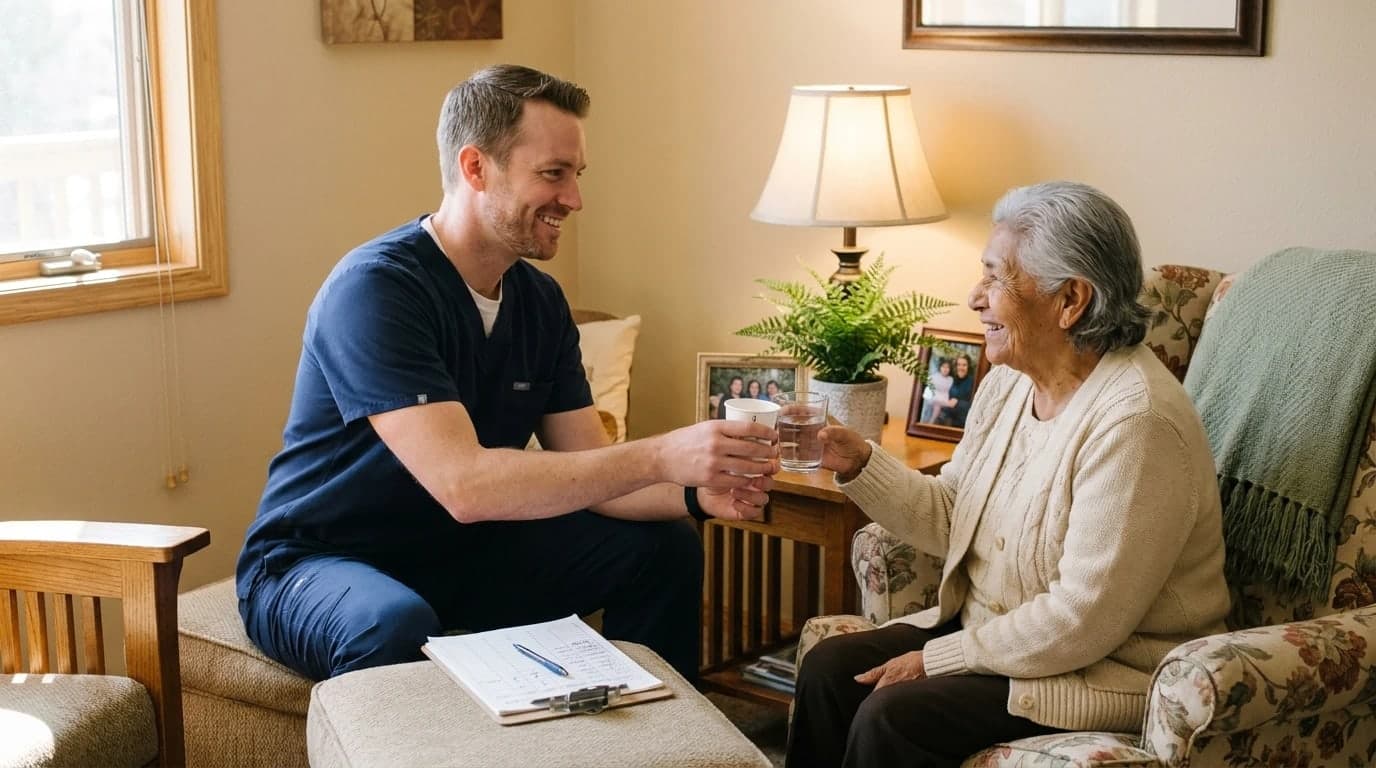
This is the question I am asked most, and the answer brings many families comfort: usually not. Hospice is a service that comes to the person, wherever they live — a private home, or an assisted living residence like ours. Because hospice travels to the resident rather than the other way round, for most families here it does not mean uprooting a parent to Durango or farther from the people who visit them.
In practice, that means a parent can often stay in the assisted living home they have come to know, with the caregivers who know them by name, while a hospice team comes in to provide the specialized end-of-life care. The two teams work together — the community's staff continuing the daily rhythm and personal care, the hospice team layering in comfort-focused clinical support. For someone in their final season, staying in a familiar place, in their own bed, among familiar faces, is one of the greatest gifts a family can protect. Leaving that behind for an unfamiliar setting is rarely necessary, and rarely what anyone wants.
How can I be there — really there?
When there is nothing left to fix, presence becomes the whole job, and that can feel strangely helpless. It is not. A few things families have found matter most:
- Just be in the room. You do not need the perfect words. Sitting quietly, holding a hand, is enough.
- Bring the familiar. Favorite music, a well-worn blanket, photographs, the smell of a familiar lotion. Hearing and touch often remain when other senses fade.
- Talk, even if they cannot answer. Say the things you want said — the thank-yous, the stories, the I-love-yous. Many families believe, and I do too, that these are heard.
- Let the team carry the medical part. Your job is not to manage symptoms; that is theirs. Yours is to be the daughter, the son, the spouse — not the nurse.
- Take care of yourself, too. Eat, sleep in shifts with family, and accept help. You cannot pour from empty, and this is a marathon of the heart.
You do not have to do this alone
Whatever stage your family is in — just hearing the word hospice, or already sitting at a bedside — please know this is well-worn ground, and there are people who walk it with families for a living. Lean on the hospice team. Lean on your parent's care community. Lean on each other.
Madison House Assisted Living is a home-like residence in Cortez, Colorado, serving families across the Four Corners. If your loved one is with us, or you are considering a home where hospice care can come alongside familiar caregivers when the time comes, contact us or schedule a tour. We would be honored to talk with you about making this season as gentle as it can be.
Frequently asked questions
- Does entering hospice mean my parent has to leave their assisted living home?
- Usually not. Hospice is a service that comes to the person — a hospice team can provide comfort-focused care right in an assisted living residence, working alongside the community's staff. For many families, staying in a familiar home surrounded by familiar faces is one of the greatest gifts of this time.
- Is hospice the same as giving up?
- No. Hospice is a shift in the goal of care — from trying to cure to keeping someone comfortable, peaceful, and present — when a cure is no longer the aim. It is active, skilled care focused on dignity and quality of time, not the absence of care.
- How long can someone be on hospice?
- Hospice is generally for people expected to have six months or less to live, but it is not a countdown — people sometimes stabilize and continue longer, and some leave hospice if their condition improves. The focus is comfort for however much time there is.