Assisted Living or Nursing Home? How to Tell What Your Parent Really Needs
Most families who think they need a nursing home actually need assisted living. Here's the real difference — and how to tell which one fits your parent.
By Parul Darji, RN, BSN, MSN, MHA
Families come to us in Cortez almost every week with the same worry: "I think Mom needs a nursing home." Nine times out of ten, after we talk it through, what she actually needs is assisted living. The two get used interchangeably, but they are very different places for very different needs — and choosing the wrong one costs families money, and sometimes costs a parent the independence they could have kept.
Assisted living is help with daily life in a home-like setting. A nursing home — properly, a skilled nursing facility — is round-the-clock medical care in a clinical one. Most families who arrive convinced they need the second actually need the first. As a nurse who has spent more than two decades in senior care, let me walk you through how to tell which one your parent really needs.
What's the actual difference between assisted living and a nursing home?
The clearest way to think about it is the kind of help involved.
Assisted living is for an older adult who is mostly themselves but can no longer manage every part of the day safely alone. The support is personal, not medical:
- Help with bathing, dressing, grooming, and getting around
- Medications given safely and on time (in Colorado, by QMAP-certified staff)
- Home-cooked meals, housekeeping, and laundry taken care of
- 24/7 staff on-site so someone is always there
- Company, activities, and the rhythm of a real home
A nursing home — the proper term is a skilled nursing facility — is a clinical setting for people who need continuous medical care: complex wound care, IV medications, feeding tubes, constant monitoring, or recovery from a serious hospitalization. There are nurses on duty around the clock because the residents genuinely need that level of care.
The plain test: if the help your parent needs is mostly about daily life, that's assisted living. If it's mostly about ongoing medical treatment, that's skilled nursing.
Curious what that daily life feels like? Here is a look at activities and daily life at Madison House.
Which one does your parent actually need?
Here are the signs that usually point toward assisted living:
- Falls or near-falls at home, especially when alone
- Missed or double-taken medications
- Skipped meals, weight loss, or a fridge full of expired food
- Increasing isolation now that driving or getting out is harder
- A recent hospital stay after which returning home alone feels risky
- Family caregivers who are stretched thin
And the signs that point toward skilled nursing instead:
- A medical condition that requires daily clinical care or monitoring
- Complex wound care, IV therapy, or ventilator support
- Being largely bed-bound and dependent for all care
- Recovery from a major surgery or stroke that needs rehabilitation nursing
If you read those two lists and your parent lands squarely in the first one, assisted living is very likely the right — and less restrictive, more homelike — answer. If you are still not sure, that uncertainty is exactly the moment to talk to a care team.
What about memory care and in-home care?
Two other options come up in the same conversation:
Memory care is a specialized form of assisted living for people living with dementia — a secured setting with staff trained specifically in dementia care. Many people in the early and middle stages of dementia do beautifully in regular assisted living with a steady routine and familiar faces; a secured memory care setting becomes the right call when wandering or safety needs grow.
In-home care keeps a parent in their own house with a caregiver coming in. It can be a good bridge, but the costs add up quickly once someone needs help through the day and night — and it does not solve the isolation that so often comes with aging alone. When you add up in-home caregiving, meals, medication oversight, and home upkeep, assisted living is often closer in cost than families expect. (We break that down in our guide to what assisted living costs in Colorado.)
Can someone move from assisted living to a nursing home later?
Yes — and this is one of the most reassuring things to understand. Choosing assisted living now does not lock your parent out of more care later. Needs change, and care changes with them — including at the very end, when hospice can come to a resident rather than requiring another move.
What matters is having a team that is honest with you. In our community, if a resident's needs grow beyond what assisted living can safely provide, we say so early and help the family plan the next step — rather than letting a small decline become an emergency. A good home would rather have that hard conversation with you in advance than after a fall.
Finding the right fit in the Four Corners
Here in the Four Corners, families do not have endless options close to home, which makes the assisted-living-vs-nursing-home question feel even higher-stakes. The good news is that most older adults in and around Cortez, Dolores, Mancos, Towaoc, and the Durango area who are struggling at home need assisted living — help with the day, not a hospital.
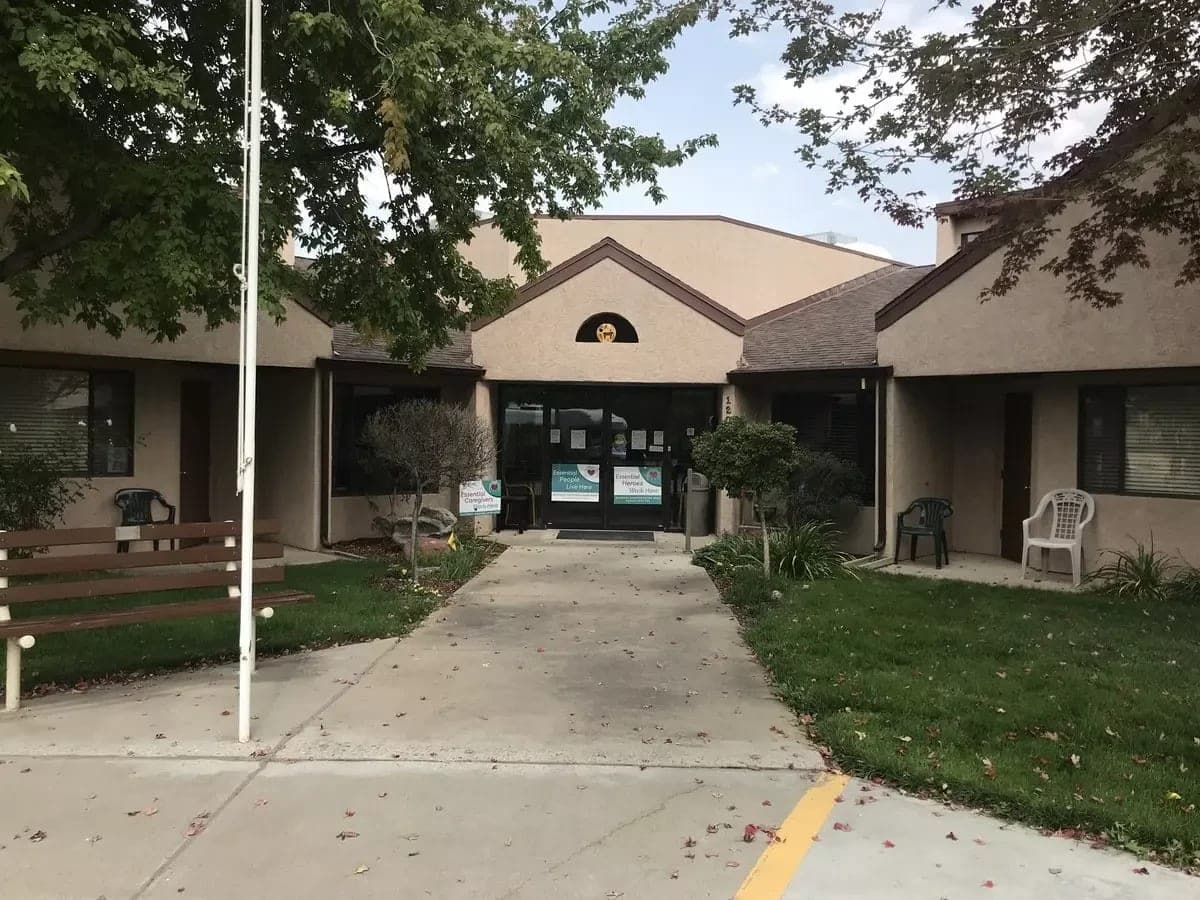
Madison House Assisted Living is a small, home-like assisted living residence in Cortez, Colorado, near Mesa Verde. We are not a facility with long clinical hallways — we are a home where residents are known by name. If you are weighing assisted living against a nursing home for someone you love, schedule a tour or call us, and we will give you an honest opinion about what your parent really needs, even if the answer is that we are not the right fit.
Frequently asked questions
- Is assisted living the same as a nursing home?
- No. Assisted living is a residential home for older adults who need help with daily activities — bathing, dressing, meals, medication — but not constant medical care. A nursing home (skilled nursing facility) provides round-the-clock clinical and medical care. Most families who assume they need a nursing home actually need assisted living.
- Can my parent move from assisted living to a nursing home later if their needs change?
- Yes. Needs change, and it's normal for care to change with them. A good assisted living team will tell you honestly when a resident's needs have grown beyond what assisted living can safely provide, and help you plan the next step rather than waiting for a crisis.
- Which is right for a parent with dementia?
- It depends on the stage. Many people in the early and middle stages of dementia do well in assisted living with a predictable routine and a team that knows them. Advanced dementia with complex medical needs may call for a memory care or skilled nursing setting. The safest path is to have a care team assess your parent's specific situation.